Sedgewick Sexton presidential campaign
Deception PointThe Sedgewick Sexton presidential campaign rises by recasting NASA from an untouchable emblem of national achievement into evidence of government waste, then stakes its political future on a promise to open space exploration to private enterprise. Gabrielle Ashe supplies the campaign’s most effective issue, but its success brings a cost: the private benefactors financing Sexton expect a return, and the candidate signals that their commercial ambitions will have a place in his presidency. When the President announces NASA’s claimed discovery of extraterrestrial life, the campaign’s attack turns against Sexton, demonstrating how dependent its momentum is on the public meaning attached to NASA.
From an Unlikely Issue to Campaign Momentum
With Sexton trailing in the primary polls and his message about government overspending failing to attract voters, Gabrielle Ashe proposed targeting NASA. Her argument was that the agency’s large budget overruns, failed missions, and repeated White House bailouts offered a vivid example of the administration’s waste. Sexton initially dismissed the idea: criticizing NASA, a prominent symbol of national pride, seemed an unlikely way to win votes. Gabrielle’s instincts proved better than his. Sexton came to see that his opponent’s record on NASA funding could be made politically vulnerable, and Gabrielle’s proposal gave the campaign a concrete subject around which to organize its fiscal critique.
The issue broke through when Sexton raised NASA’s spending on a call-in program. One caller demanded to know why the President did not cancel the agency’s undertaking; Sexton answered that much of the project’s hardware was already in orbit and that stopping it would mean admitting to a multibillion-dollar mistake made with taxpayers’ money. Calls continued, and the discussion suggested that listeners were beginning to regard NASA as a policy choice rather than a permanent national fixture. A few callers defended the agency’s role in humanity’s quest for knowledge, but the broader response showed that its spending had become a potent campaign issue.
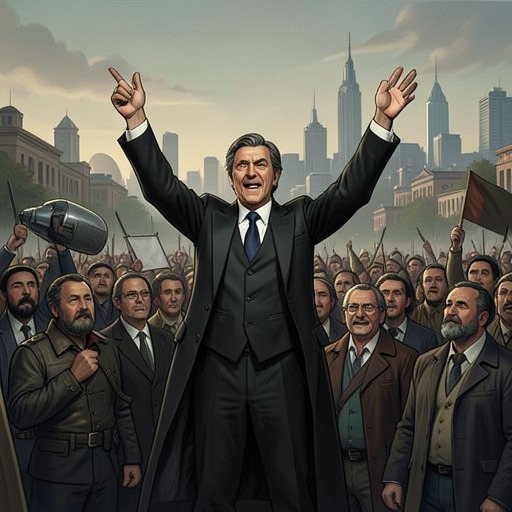
In the following weeks, Sexton defeated his opponents in five crucial primaries and appointed Gabrielle as his personal campaign assistant, crediting her with bringing the NASA question to voters. The shift also displaced attention from criticism of his voting record as racist and sexist. Her success made Gabrielle a rising political figure within the campaign, while Sexton’s public standing appeared to validate the strategy. Passing the Washington Monument in his limousine, he felt that events had placed him on the path to the presidency.
The NASA Attack and Its Reversal
The campaign’s focus on NASA shaped Sexton’s political exchanges as well as its public outreach. In a televised discussion with Marjorie Tench, he tried to exploit a mention of his criticism of the agency by asking whether NASA had suffered another recent failure. Tench initially denied hearing such a rumor, but later put the issue back to him in a more constraining form: would he abolish the space agency if space exploration could not be conducted for less than NASA was already spending? The question forced Sexton to clarify whether his position was simply that NASA should be managed more efficiently or that the agency itself should be eliminated. His attempt to evade a definitive answer exposed the tension between a popular attack on spending and the consequences of carrying that attack to its extreme.
That tension became decisive when the President announced NASA’s claimed discovery of extraterrestrial life. The President feared that political opponents would portray the discovery as a fraud by NASA and the White House, shifting public attention from the scientific claim to a conspiracy investigation. Sexton’s campaign had already made NASA a central political target, and his answer to Tench had committed him to abolishing the agency if necessary. The announcement therefore landed as more than a general boost to the incumbent: it placed Sexton’s own position in direct conflict with a discovery presented as a national triumph.
The reversal was swift. A television analyst described the campaign as having fallen from its earlier heights, arguing that Sexton’s stated willingness to abolish NASA funding made the announcement a blow from which his candidacy would not recover. The same commentary said the discovery had restored public confidence in NASA and renewed national pride. Sexton, watching the coverage, blamed Tench, Gabrielle, and the President, but the political reversal arose from the campaign’s own choice to make NASA the test of government waste. A strategy that had turned the agency into a liability for the White House now left Sexton exposed when NASA was presented as having achieved an extraordinary success.
Money, Benefactors, and a Policy Return
The campaign’s ascent depended not only on the public appeal of its NASA message but also on private financing. At a meeting with an elderly representative of wealthy aerospace interests, Sexton learned that another installment of campaign money had been made. The benefactor stressed that the funds were to be used solely for the campaign and praised the way its managers had spent them as Sexton’s poll numbers improved. He also said he had persuaded six more people to meet Sexton that night. Sexton accepted the man’s brusque manner because the money came from people whose support had helped place him within reach of the presidency.
Sexton understood these encounters as more than strategy sessions. They reminded him that his benefactors expected a return on their investment, and the return they sought was an unusually bold demand that would nevertheless fall within a president’s influence. That dependence complicates the campaign’s public case for reducing waste: its message presents private enterprise as a better route into space, while its own candidate relies on wealthy private interests whose financial support is tied to expectations about what his presidency might deliver.
At a gathering of supporters, Sexton made the exchange between money and policy explicit. He compared building a presidency to building a company: investors expected returns, and the people supporting his campaign were political investors. He pledged not to forget them and described their missions as one and the same. The toast transformed a general appeal for trust into a promise of reciprocity. His vision of opening the final frontier to private initiative was therefore also a commitment made to the people financing his campaign.
Political Meaning and Consequences
The campaign’s central achievement is to make NASA’s funding politically legible. Gabrielle’s proposal and Sexton’s public argument give voters a way to connect failed missions, cost overruns, and public subsidies to a larger dispute about government spending. That framing helps carry him through five key primaries, but it also narrows his room to maneuver: when NASA is associated with a claimed discovery of extraterrestrial life, his earlier attacks and his answer to Tench become measures of his credibility and judgment.
The campaign’s trajectory also reveals a conflict between its language of public accountability and its financial dependence on private aerospace interests. Sexton condemns taxpayer spending on NASA while cultivating backers who expect policy benefits from his possible presidency. The story’s reversal does not erase the campaign’s genuine electoral success; it shows that the same political machinery that turned NASA into an effective target could not control what NASA’s next public meaning would be. A message designed to make the agency a symbol of waste becomes vulnerable when the agency is presented as a source of national pride.